
Bank impersonation scams
In a bank impersonation scam, a scammer calls, texts or emails saying they’re from your bank. They say there’s a problem with your account, like a security breach or suspicious payment. They sound urgent and convincing.
To fix the problem and secure your account, the scammer tells you to follow their instructions. They then direct you to a fake website or live chat, asking you to click on a link that’s actually malicious. Clicking this link downloads a remote access app, often AnyDesk, giving them access to your device and, potentially, your accounts. They ask for one-time passcodes or activation codes and persuade you to authorise payments in the app, or activate a mobile device for online banking. If you do as they ask, they can gain access your account and steal your money.
- Be suspicious of calls, texts or emails supposedly from us asking you to take urgent action.
- Be suspicious of calls supposedly from us where the caller doesn’t know your name, or the registered administrator of your account.
- Don’t give anyone remote access to your devices.
Remember, we’ll never contact you to:
- direct you to a live chat on a website to secure your account
- use a remote access app to view or control your device
- give us an activation code or one-time passcode
- authorise, reauthorise or reverse a payment
- give us a Token 3 response: these are only used to authorise a payment
- add a code to your phone number: codes starting *21* are used to set up call forwarding that direct your calls and messages to fraudsters
Invoice redirection scams
Invoice redirection is when a scammer poses as a supplier, vendor or senior executive to trick you into sending them money.
The scammer often contacts you using a spoofed or hacked email, typically targeting finance teams. They say their business bank details have changed and give you a new sort code and account number to use for payments.
- Check transaction and payment details regularly for changes.
- Confirm bank account changes in person or through a trusted contact number: don’t rely on email alone.
- Train staff to spot suspicious changes, such as subtle misspellings or domain changes in email addresses.
Registered device scams
This is where a scammer tries to set up your account on their device. They call pretending to be from our fraud team. They say there’s an issue with your account and you need to follow some simple instructions to reactivate it. They convince you to share activation codes or one-time passcodes.
Then the scammer directs you to our app or online banking to approve a new device registration. If you do this, the scammer can access to your account.
- Don't share activation or one-time passcodes with anyone.
- Regularly check which devices have access to your bank accounts.
- Check the URL before clicking links in messages, emails or websites.
- Phone us immediately if you’re concerned.
Remember, we’ll never contact you to:
- direct you to a live chat on a website to secure your account
- use a remote access app to view or control your device
- give us an activation code or one-time passcode
- authorise, reauthorise or reverse a payment
- give us a Token 3 response: these are only used to authorise a payment
- add a code to your phone number: codes starting *21* are used to set up call forwarding that direct your calls and messages to fraudsters
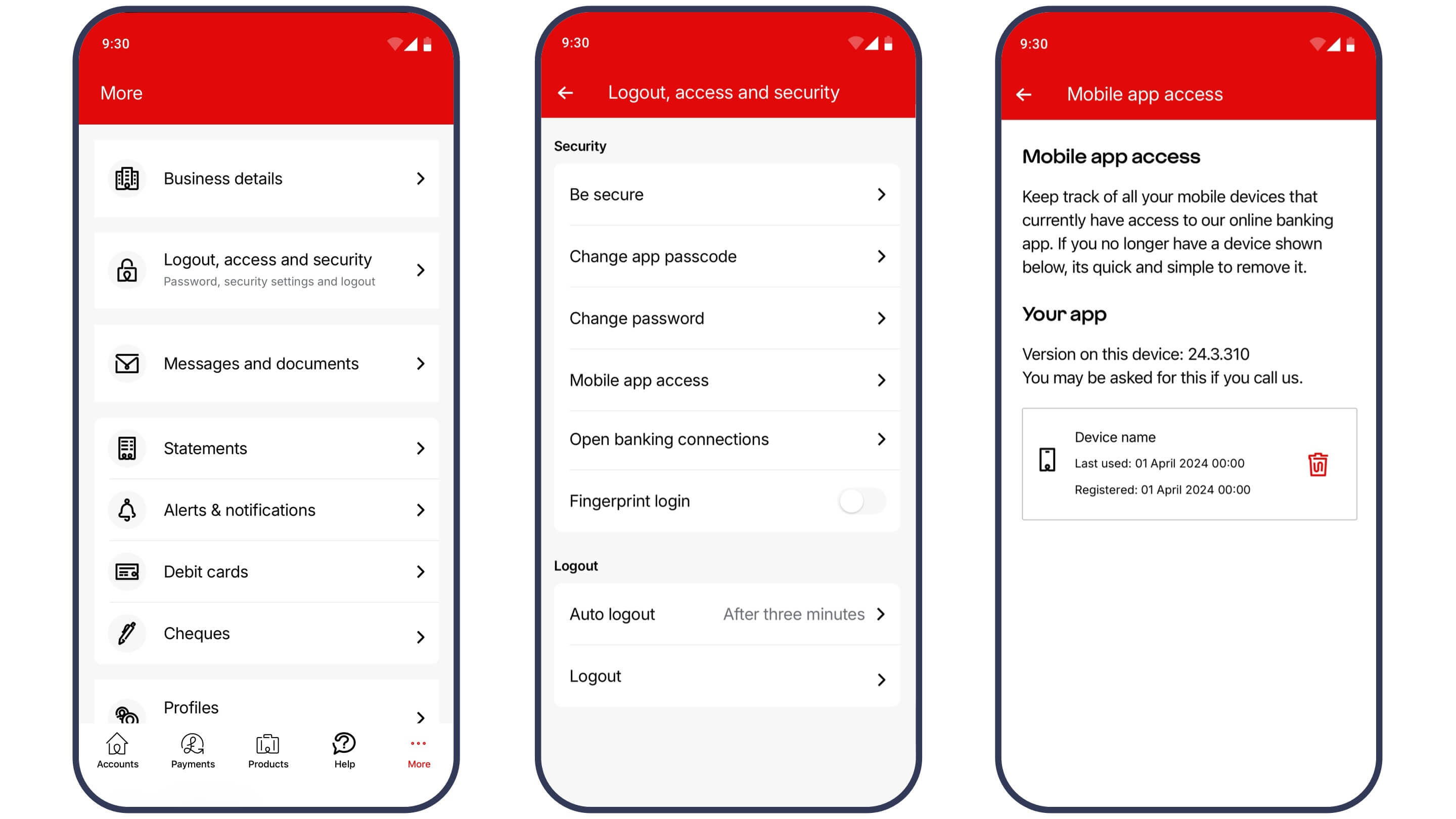
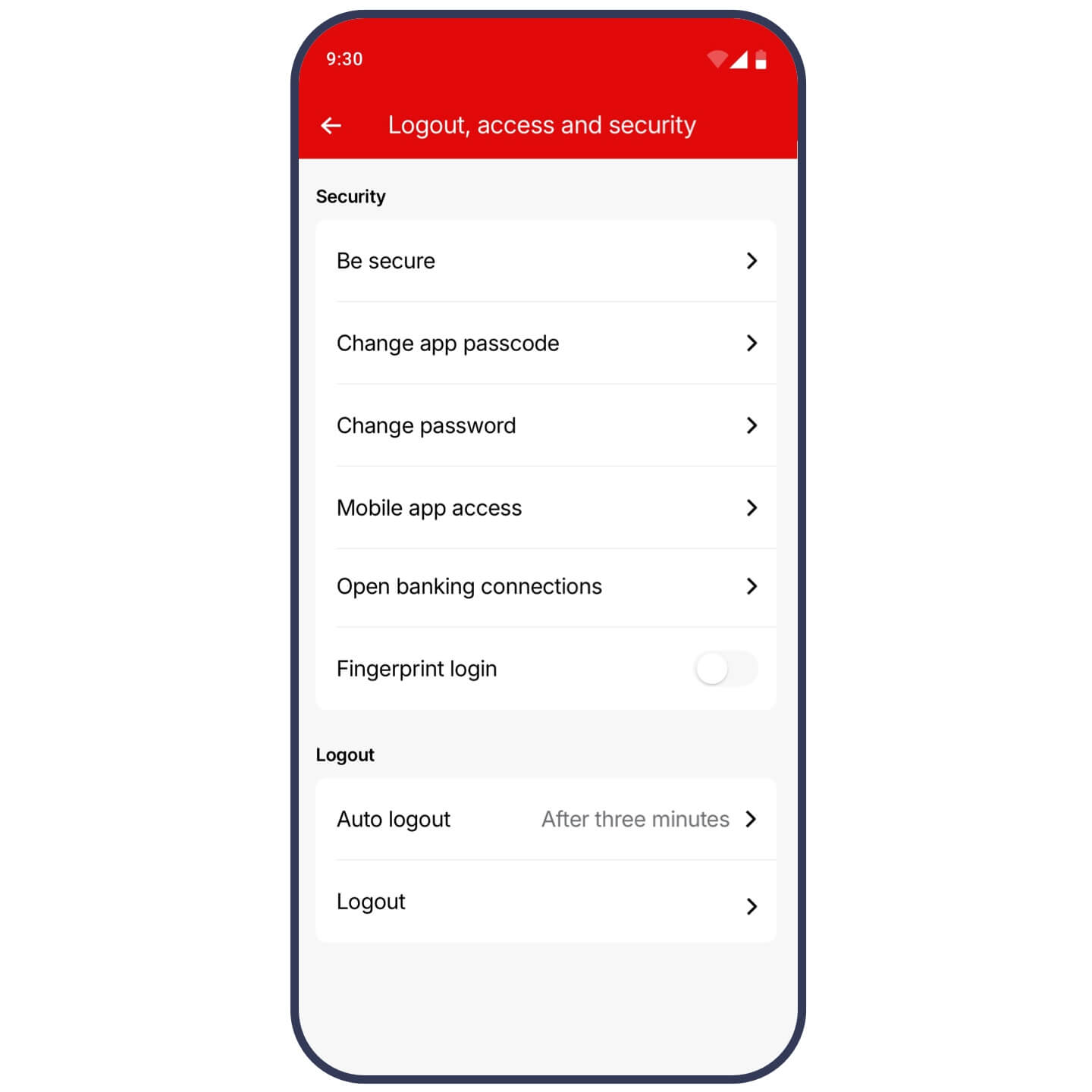
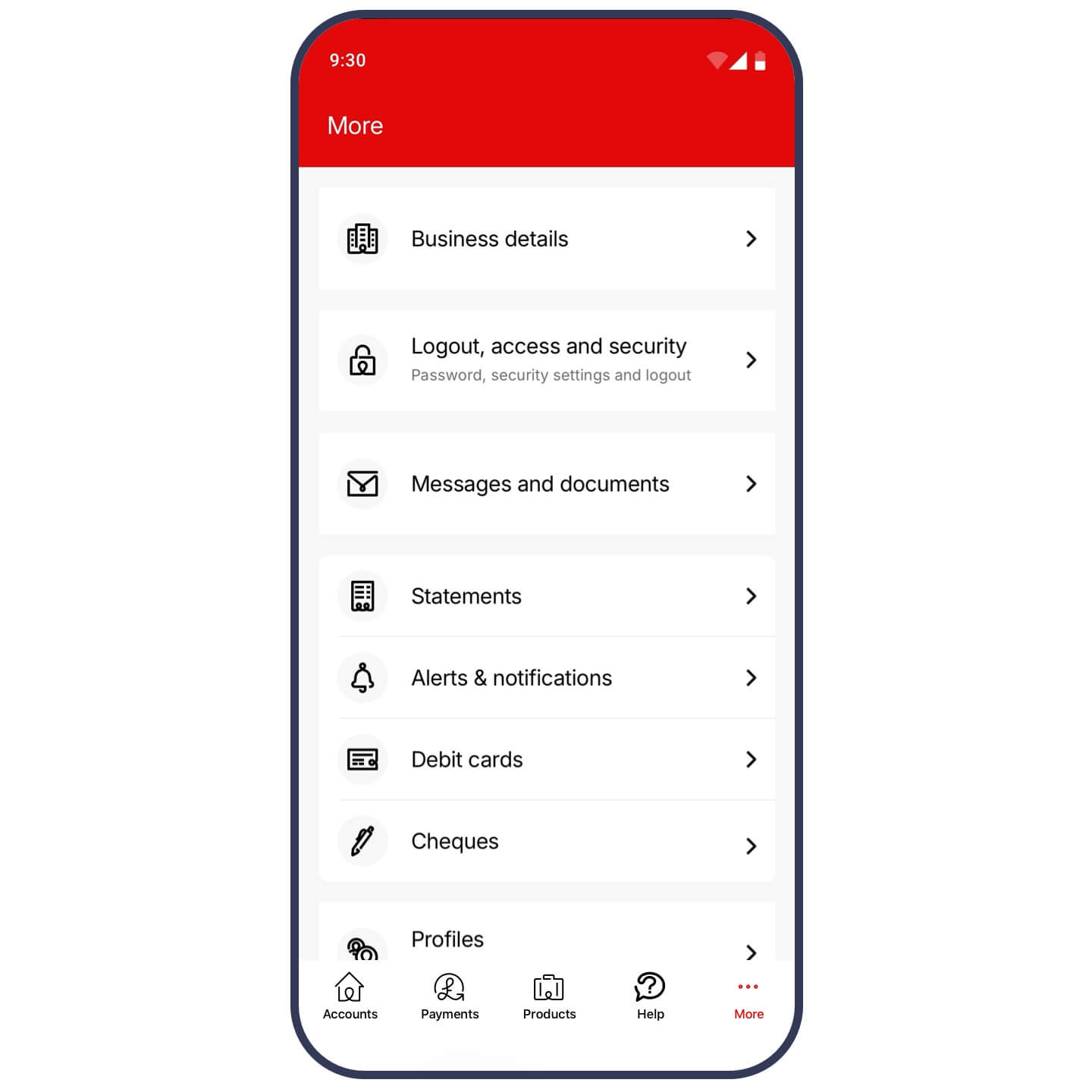
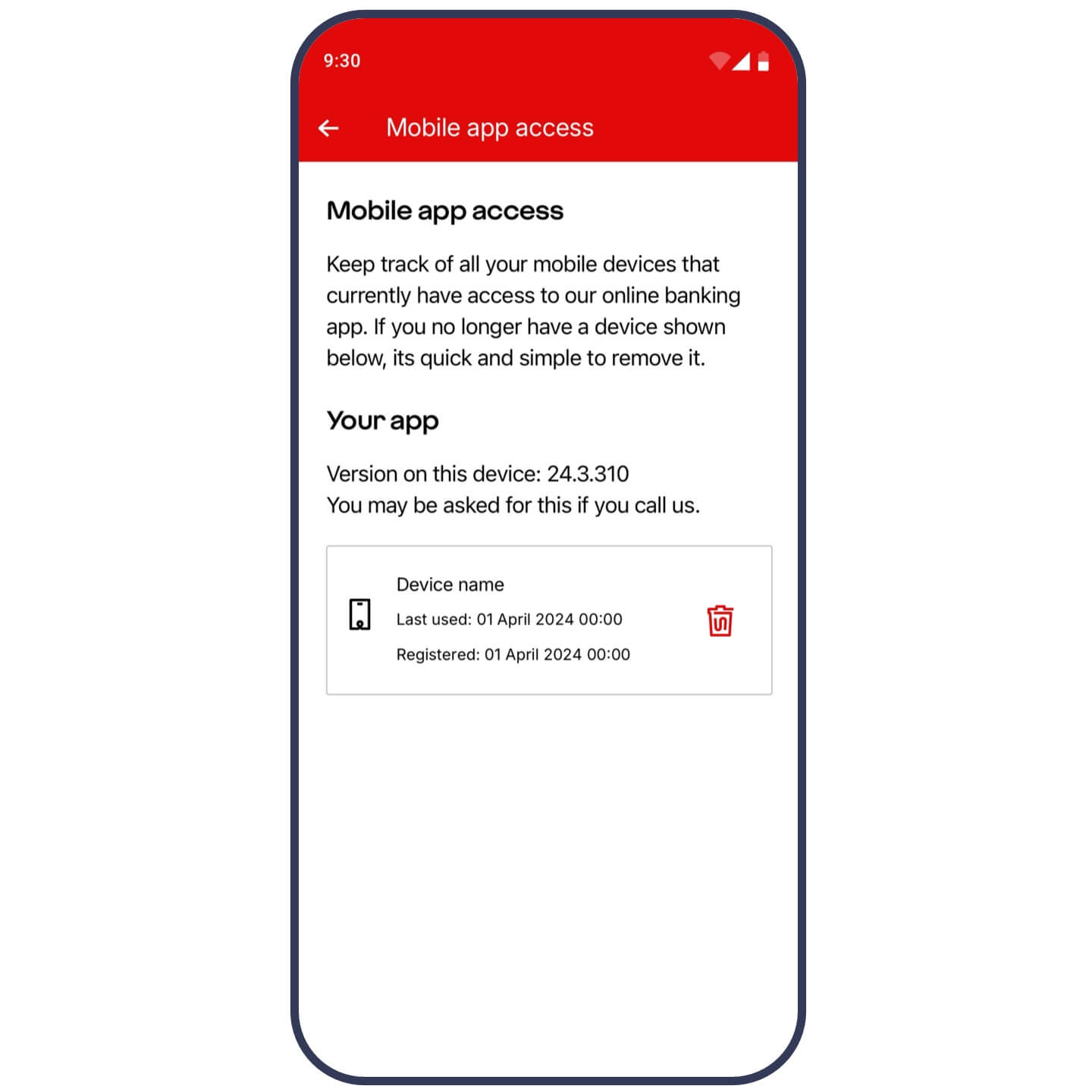
You can see the devices registered to your account in our app. It’s important to check this list regularly.
- Sign in and tap ‘More’
- Tap ‘Logout, access and security’
- Tap ‘Mobile app access’
If you don’t recognise a device in the list, take a note of its details, and then delete it.
Then phone us immediately to report fraud. And check your device for malware.
Purchase scams
Purchase scams are when you pay for goods or services that don’t exist. They mainly happen online with ads on social media or fake websites offering low prices or short-term offers. These are designed to rush you into placing an order.
The scammer often asks for a large deposit or to be paid by bank transfer. But, after you pay the money, you discover the goods or services don’t exist.
- Do research before you buy: check online reviews, as well as business registration and contact details.
- Be suspicious of emails or calls with deals that seem too good to be true.
- Pay by debit or credit card for better protection, instead of by bank transfer.
- Be wary if a supplier asks for full payment upfront, especially the first time you use them.
- Try to see what you’re buying before you pay for it.
- Train staff to spot danger signs in procurement and payment processes.
CEO impersonation scams
CEO impersonation, or business email compromise, is where a scammer pretends to be a senior executive. They then trick an employee into sending money or sharing sensitive info.
The scammer either spoofs the email or gets it through a phishing attack. They then email the employee telling them to make an urgent payment, change payment details or share confidential info. The email pressures the employee by stressing urgency and secrecy.
- Check in person or by phone any bank account changes, high-value payments to a new account, or requests for sensitive info.
- Create a culture where colleagues feel able to question requests from senior staff.
- Train staff to spot danger signs like urgency, secrecy, or unusual tone or timing in emails.

Investment scams
Investment scams target businesses with fake or misleading investment opportunities. They can involve fake startups, financial products or business ventures and promise guaranteed, or unusually high, returns with little risk.
The scammer contacts you by phone, email, social media, or even in person, posing as an investment advisor, fund manager, or representative of a promising venture. They present a compelling investment opportunity, often offering cryptocurrency or shares in a startup. They use short-term offers, high-pressure tactics, or supposed insider tips to rush you. Then they ask for money to secure the investment.
- Be suspicious of deals that promise guaranteed returns or sound too good to be true.
- Take your time and consult a financial advisor: legitimate ventures won’t rush you.
- Research any investment opportunities thoroughly.
- Don’t invest if they're not on the FCA Financial Services Register. Link opens in a new window
- Check for known fraudsters on the FCA Warning List. Link opens in a new window
Report business fraud
Phone us immediately, if you’re worried about a payment or think you’ve been scammed.
Monday to Friday 8am to 7pm
Saturday 9am to 5pm
0800 012 1353
Outside the UK
+44 113 234 4879
All other times
0800 121 7365
Outside the UK
+44 141 221 7300
Or phone 159
159 is the free, secure Stop Scams UK hotline. It's voice automated, so just say “Virgin Money” to be put through to us. Find out more on the Stop Scams UK website. Link opens in a new window



Get help from Take Five
Take Five to Stop Fraud is a campaign led by UK Finance. See how it can help you and your business stay safe from fraud.
takefive-stopfraud.org.uk/protect-your-business Link opens in a new window