

Cybercrime is one of the fastest growing risks to businesses. It can also be expensive. Did you know that small businesses are just as at risk from cybercrime as large organisations? Gov.uk Link opens in a new window estimate that UK businesses have experienced approximately 5.19 million cybercrimes between April 2025 and April 2026. It’s more important than ever to know about the cyber risks your business could face.
What is Cyber Security?
Cyber security is all about protecting the devices you use to run your business, such as smartphones, laptops, tablets and computers. It also helps protect the services you provide to customers. It's about stopping unauthorised access to the personal information stored on devices, and to the systems that keep your business running and online.
How to improve your business cyber security
1. Back it up
Backing up your data helps you recover your business data and services if there is an IT failure or a cyber-attack, such as ransomware. Here's a handy guide to ransomware - NCSC.GOV.UK Link opens in a new window. Think about how much business data you could afford to lose. This will help you work out how often you should back up your data. Automating those backups is a fuss-free way to do this. It’ll give you peace of mind that your data is protected.
2. Mighty password strength
Avoid using easily discoverable information like pet names or favourite sports teams, as criminals can easily find these details on your social media profiles.
- The National Cyber Security Centre (NCSC) recommends combining 3 random words Link opens in a new window that each mean something to you. This is a great way to create a password that's easy to remember but hard to crack.
- Consider using a "password manager” Link opens in a new window They make it easy to set up strong, unique passwords for all your accounts that you don’t need to remember. Most are designed to synchronise across devices and browsers, making them hassle-free to use.
- Layers, layers, layers! Enable two-factor authentication (2FA) when available. It asks for an extra one-time code, from an app or text message, as well as your password when you log in. This extra layer of security helps protect your accounts if your password is compromised.
You can check if your password or email address has been compromised using this free tool "Have I been Pwned?” Link opens in a new window
3. Protect yourself from viruses
No one likes viruses and bugs – especially not the ones that infect your computers! Losing time and money while recovering from malware and phishing attacks can be damaging to small businesses. Digital ads can sometimes contain malware that can infect your computer or device. AdBlocking tools block insecure internet sites and reduce the risk of viruses.
4. Phishing around
A popular phishing attack is Business Email Compromise (BEC). This is when a business email account is compromised and used by an attacker to send invoices and payment requests that look genuine. It can also be used to send attachments that infect the recipient’s device with viruses. The emails often target specific people, like finance teams or executives, to trick staff into releasing funds or information. To be safe, it’s best not to rely on email alone for financial instructions. Call the person on an official number (not the one in the email!) to check. A good rule of thumb is to be suspicious of anything unexpected, or tasks you are not normally asked to do. It’s also a good idea to train your staff not to discuss work on external platforms such as personal messaging apps. These platforms are popular with fraudsters because they can help them avoid detection. For more top tips on this, check out the infographics from the NCSC Link opens in a new window
5. Knowledge is power
Being aware of cyber risks and how to keep yourself and your business safe is important.
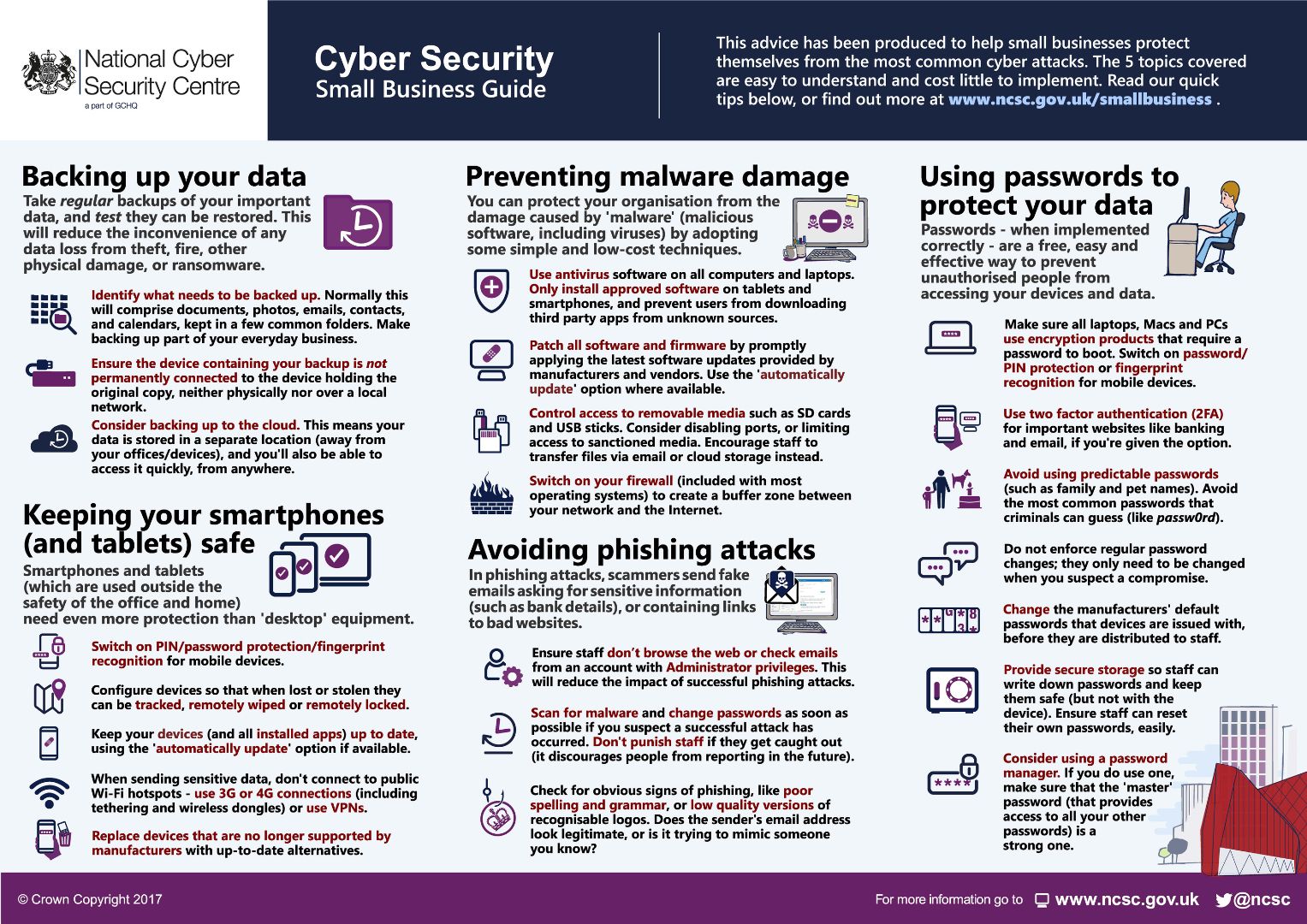
Check out this handy guide Link opens in a new window below from the National Cyber Security Centre – the perfect handout for you and your colleagues to keep by your desks.
6. Think about Cyber Insurance
Most small businesses don't have an in-house cyber security expert, a dedicated crisis management team, or budget set aside for claims against your business. That's where cyber insurance comes in. It's designed to provide access to specialist support and financial protection to help your business recover following a cyber security event* - and it's a cover for businesses of all sizes to consider.
Superscript, Virgin Money's business insurance partner, offers cyber insurance. Their cover provides access to a 24-hour breach response helpline, plus legal, IT security and PR crisis management specialists* - and more.
*Subject to full policy terms, conditions and exclusions.
Virgin Money is not responsible for the content on external websites.